GPS tracking
10 Benefits of GPS Tracking for Dump Truck Fleets
A truck you can't see is a truck you can't plan around. GPS tracking shows dump truck and bulk hauling fleets where every truck is and how it's being driven, which saves time, fuel and repairs. Here are the ten benefits haulers see most, and how GPS fits with Bulk Haul Software.
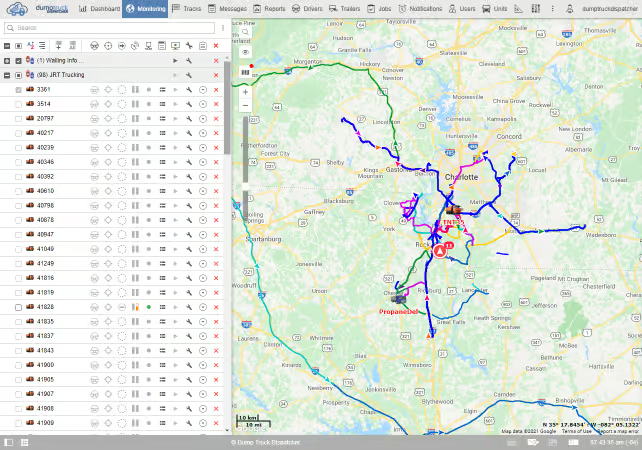
10 Ways GPS Tracking Pays Off for Hauling Companies
Most of these come down to the same thing: knowing where a truck is and what it's doing while it's happening, not after the fact.
Less waiting at the pit
When you can see a truck has been parked at the quarry for 40 minutes, you can give it the next load instead of finding out at the end of the day.
Less engine idling
Idle reports show which trucks run with the engine on while parked. Idling burns fuel and adds engine hours without moving a single load.
Safer drivers
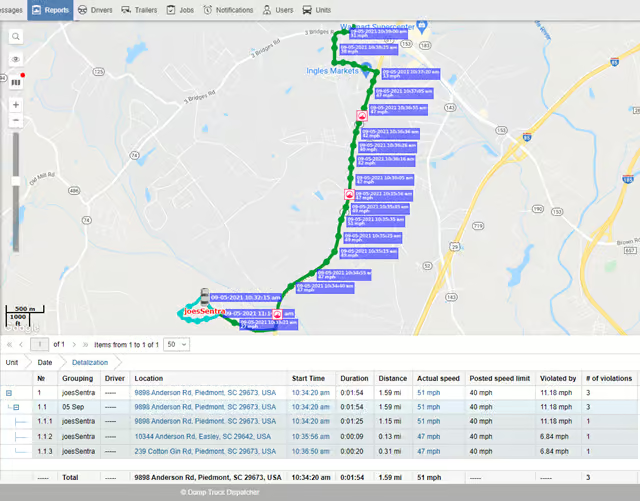
Speeding, hard braking and sharp cornering show up in reports, so you can coach the drivers who need it before an accident happens.
Lower fuel bills
Aggressive driving and idling both waste fuel. Once drivers know the truck reports how it's driven, both tend to drop.
Less wear on the trucks
Smoother driving is easier on brakes, tires and drivetrains, which means fewer repairs and fewer trucks sitting in the shop.
Better arrival times for customers
With every truck on the map, the dispatcher can send the one closest to the job and give the customer an honest arrival time.
A record of where each truck was
Location history settles arguments about when a truck reached the site or how long it waited there.
Alerts when a truck moves when it shouldn't
Set an alert for a truck that leaves the yard after hours. If one is stolen, a tracker improves the odds of getting it back.
Trackers on trailers and equipment
Low-cost asset trackers work on trailers, loaders and other equipment that has no engine data of its own.
Faster IFTA mileage
Many GPS systems report miles driven in each state, which is the mileage an IFTA return needs, without drivers keeping paper logs.
GPS and dispatch
GPS Tracking Alongside Your Dispatch Board
GPS shows where a truck is. Bulk Haul Software shows what it's supposed to be doing: the job, the load and whether the driver has marked it loaded or delivered. Together they answer the question every dispatcher asks all day.
- GPS tracking available as an add-on on every plan
- Integrations with Samsara, Geotab, Wialon and IntelliShift
- Dispatch status from the driver app, with or without GPS
- Mileage pulled from your telematics system on the Pro plan
Mileage and maintenance
Service Trucks by the Miles They Actually Drive
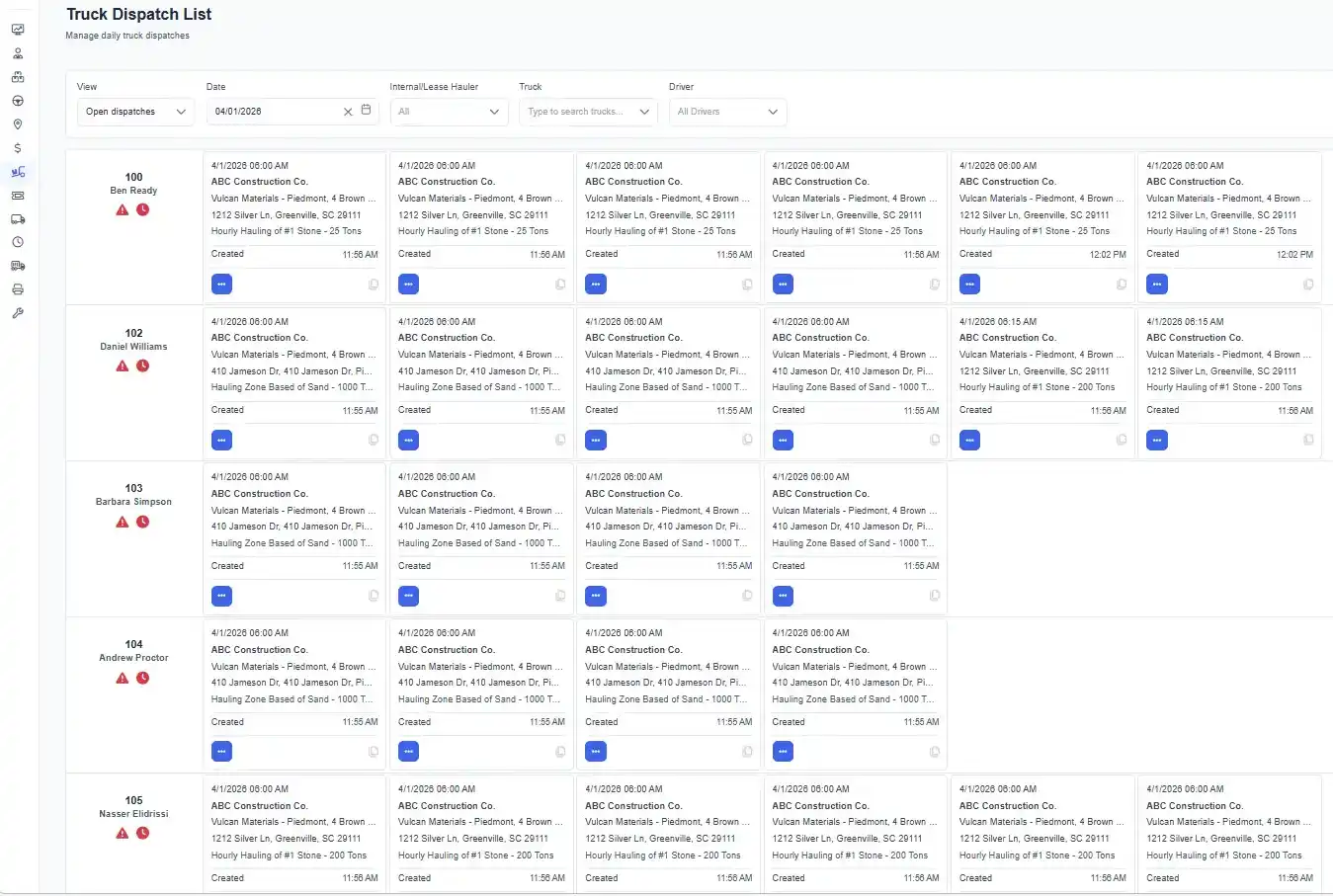
Preventive maintenance by mileage only works if the mileage is current. With the Pro plan's telematics integration, truck miles come into Bulk Haul Software instead of waiting on someone to read the odometer.
- Service intervals in days, miles or hours
- Overdue and due-soon services for every truck
- Work orders that record the odometer and cost
- Driver DVIR defects sent to the shop
Driver behavior
Coach Drivers With Real Numbers
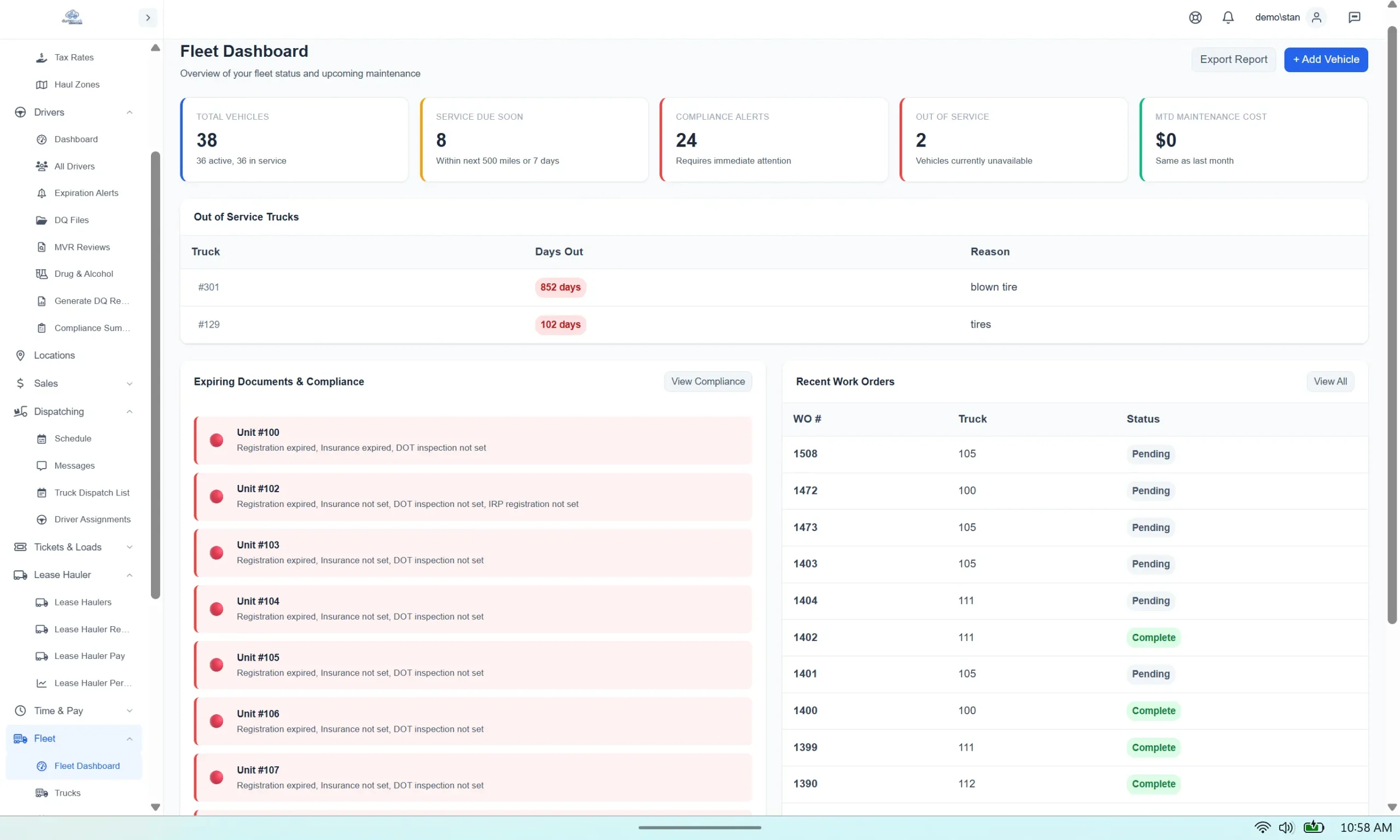
Telling a driver to slow down rarely works. Showing them the report does. GPS systems log speeding, hard braking and idling truck by truck, so coaching starts from facts.
- Speeding events with time and place
- Hard braking and sharp cornering
- Idle time for each truck
- Trends you can compare from month to month
GPS Tracking for Every Kind of Bulk Hauling
Aggregate, logging, agriculture and winter fleets all use GPS to keep trucks moving between loads.
Frequently Asked Questions
GPS tracking cuts the time trucks sit waiting for their next load, shows which trucks idle, flags speeding and hard braking, lowers fuel use, and gives the dispatcher accurate arrival times. It also keeps a record of where each truck was, warns you when a truck moves after hours, and can report miles by state for IFTA.
GPS tracking is available as an add-on on every plan. If you already use Samsara, Geotab, Wialon or IntelliShift, Bulk Haul Software integrates with them.
Samsara, Geotab, Wialon and IntelliShift. On the Pro plan, Bulk Haul Software pulls each truck's mileage from those systems.
No. Drivers update each dispatch in the driver app as they load and deliver, so the office can follow the job's progress without GPS. GPS adds the truck's location on top of that.
Many GPS systems can report the miles each truck drove in each state, which is the mileage you need to file IFTA. Check that your GPS provider offers that report before you count on it.