The Real Reason You’re Missing Loads: Hidden Cycle Time Delays
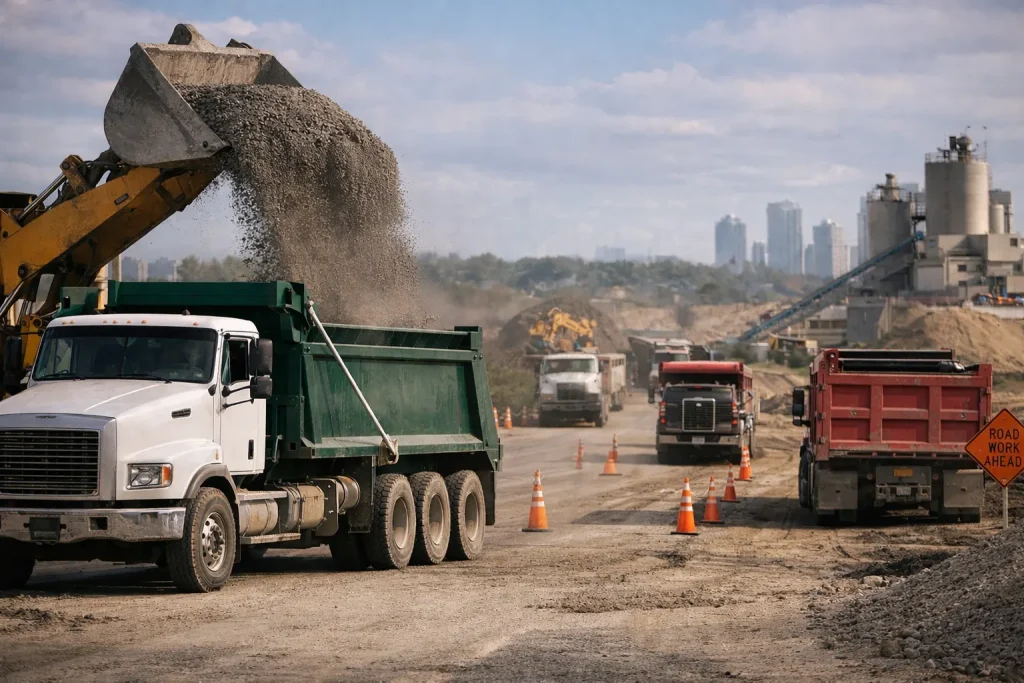
If trucks are running all day, but load counts still come up short, the issue is rarely effort or availability. More often, it comes down to hidden cycle time delays that often get overlooked by dump truck operators. Small gaps between dispatch, loading, and unloading stretch just enough to erase a load by the end of the day.
Local hauling is built on repetition. One truck runs the same loop repeatedly, and daily output depends on how tight that loop stays. When dispatch cycle time slowly expands through jobsite wait time, plant slowdowns, or quiet dump truck delays, loads fall off without triggering alarms. Drivers stay busy. Dispatch stays active. Missed loads still pile up.
This breakdown explains where those minutes disappear, why hauling productivity drops even on good days, and how local fleets miss targets without knowing what actually went wrong.
What “Cycle Time” Actually Means for Local Dump Truck Fleet Operations
Cycle time is the full loop a truck runs to complete one load and get ready for the next one. It starts when a truck is dispatched and ends when it is ready to haul again.
In local hauling, that loop usually looks like this:
Dispatch → travel to pickup
Wait at plant, pit, or yard
Load
Travel to jobsite or dumping location
Jobsite wait time and delays
Unload
Return and repeat
Every step matters. Any delay inside this loop stretches the day.
Most local fleets still think more about miles, hours, or truck count. Those numbers do not explain daily output. Loads per truck per day depend on how tight this loop stays. When one step slows down, capacity drops.
That is why tracking loads per truck per day and truck revenue by job gives a clearer picture than distance or hours worked. Over a full shift, a few lost minutes at the plant or jobsite often decide how many loads actually get delivered.
Why These Delays Stay Hidden
Hidden cycle time delays rarely show up as obvious problems. Trucks are moving. Drivers are checking in. Dispatch boards stay full. On the surface, the day looks productive.
Most time loss happens in small gaps that do not trigger alerts. The load was delivered later than planned. The next one starts a little late. Nothing feels broken, so nothing gets questioned.
Over time, those small slips stretch dispatch cycle time. The only signal is fewer loads by the end of the day. Fleets that do not track cycle time and load efficiency metrics often miss these patterns until missed loads become routine.
The sections below break down where those minutes disappear, starting with the delay most local fleets underestimate.
1. Jobsite Wait Time Is Rarely Measured
This is the first and most common area that time leaks out of a local hauling day. Jobsites introduce small delays that feel routine, so they rarely get tracked or questioned.
A few extra minutes here and there does not look like a problem in isolation. Drivers expect to wait. Dispatch expects it too. Because waiting feels normal, it becomes invisible.
After that brief delay sets in, the causes usually look like this:
Waiting for a loader
Waiting for dump space
Traffic control delays
Missing or unclear site directions
The true cost and real math increase faster than most people realize. Eight to twelve extra minutes per load is enough to remove one full load from a trucks daily run. Multiply that by twenty trucks and the result is twenty missed loads across the fleet.
This is how jobsite idling and on-site wait time turns into lost hauling productivity without a single breakdown or missed dispatch.
2. Dispatch Sees Movement, Not Friction
Dispatch cycle time blind spots usually start with what gets tracked versus what does not. Dispatchers can see that trucks are moving, but they cannot always see where time is being lost.
After a short review, most dispatch boards show the same signals:
Assigned
Acknowledged
Finished
What often goes unseen is what really happens in between. Idle time at sites, repeat slow locations, and the places where dump truck delays actually occur rarely show up clearly.
This creates a false sense of progress. Trucks are completing loads, but dispatch cycle time stretches quietly. Without clear visibility into real-time load status and job progress, delays repeat and no alarms go off.
By the time missed loads appear at the end of the day, the cause is already buried.
3. Small Delays Multiply Across the Day
Local hauling depends on repetition. The same loop is run repeatedly, and the early delays matter more than late ones.
When a truck loses time early in the cycle, that delay pushes everything behind it. Subsequent dispatches slide back. End-of-day cutoffs tighten. Driver hour limits come into play. Plant closing times arrive sooner than expected.
One slow load early in the day can remove the final load entirely. The truck keeps running, but by the end of the day it comes up short.
This is why fleets focused on improving truck utilization pay close attention to how small delays compound instead of chasing bigger equipment or longer hours.
4. Missed Loads Aren’t a Dispatch Skill Issue
Missed loads are often blamed on dispatch, but the problem usually sits elsewhere. Most dispatchers are not making bad calls. They are making reasonable decisions with incomplete information.
When visibility is limited, dispatch reacts to what it can see. A truck delivered a load late. The next assignment shifts. Nothing clearly explains why time was lost, so the adjustment feels routine instead of corrective.
What is missing is not effort; It’s a pattern of clarity. Without consistent insight into jobsite wait time trends, load by load cycle duration, and repeat choke points, the same trucks keep getting sent to the same slow sites. The same delays show up again the next day and then are repeated day after day, week after week.
Clear driver status updates and on-site time reporting helps close that gap by showing where time really does vanish during routine daily operations. Without that context, missed loads keep repeating even when dispatch feels busy and responsive.
5. Local Hauling Feels This First
Local hauling exposes cycle time problems faster than long haul work. In long-haul operations, delays mostly affect arrival time. In local hauling, they affect how many loads fit into the day.
Local operations depend on volume. Trucks turn fast. Plants run on tight schedules. Jobsites close at fixed times. There is very little slack built into the day.
When even small dump truck delays occur at plants or dumpsite locations, the impact is immediate. Daily capacity drops. Cost per load rises. Hauling productivity slips without any single moment that looks like failure.
This is why day-by-day dispatch planning for local hauling matters so much. Local fleets feel cycle time creep first because their margins depend on repetition, not distance.
What Changes When Cycle Time Is Visible
When cycle time is visible, the day becomes easier to manage. Delays still happen, but they stop blending into the background. Jobsite wait time shows up clearly, and slow turns become patterns instead of guesses.
The biggest shift is clarity. Dispatch can spot early delays before they erase the last load of the day. Truck utilization improves because time is managed where it is actually lost, not where it is assumed to be lost.
For local hauling operations, this keeps loads from being missed and falling off in the background. If you want a simple way to see cycle time across dispatch, jobsites, and loads all in one place, you can schedule a demo with Dump Truck Dispatcher and decide if it fits how your operation runs.
Time is lost in the gaps between loads. Not in big decisions, but in constant interruptions that never get tracked. In this article, you’ll see where those minutes go, why…
If you run trucks long enough, DOT inspections stop feeling rare. They become part of the job. What catches many fleets off guard is not the inspection itself, but the…
If trucks are running all day, but load counts still come up short, the issue is rarely effort or availability. More often, it comes down to hidden cycle time delays…