DOT Compliance Checklist: How to Avoid Fines & Keep Your Fleet on the Road
Every trucking company should have a clear, up-to-date DOT compliance checklist. It’s not just about staying organized — it’s about protecting your business when audits or inspections come around.
From hauling gravel to running job site deliveries, you’re still operating under strict DOT and FMCSA regulations. And if you can’t prove compliance when the time comes? You risk fines, downtime, or even being shut down.
We’ll walk through what DOT compliance really involves and highlight the essentials of a strong FMCSA compliance checklist so you’re always ready when it matters.
What Is DOT and FMCSA Compliance?
If your company operates commercial trucks, you’re required to follow DOT and FMCSA regulations.
So, what is DOT compliance? It means meeting the rules set by the U.S. Department of Transportation for things like driver safety, vehicle inspections, licensing, and proper documentation. These rules help ensure that your fleet is operating legally and safely.
The FMCSA operates under the DOT and oversees safety and compliance for commercial trucking. It focuses specifically on trucking operations — overseeing audits, monitoring safety scores, and enforcing compliance across the industry.
DOT Audits: Why You Should Be Ready
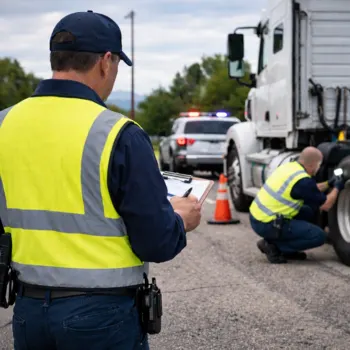
DOT audits aren’t just for large fleets and they rarely give much notice. They can be triggered by poor roadside inspection results, complaints, high crash rates, or safety score issues. If you’re a new carrier, expect a mandatory audit sometime in your first six months.
If your trucking company compliance is lacking in any area, it won’t take long for it to show, especially with the FMCSA’s Digital Safety Measurement System tracking performance.
During an audit, inspectors will expect quick access to records: driver files, drug and alcohol testing programs, inspection reports, and more. Missing or outdated documents can lead to violations, fines, or even being placed out of service.
Having a clear, updated DOT FMCSA compliance checklist helps you stay organized and prepared. Audits can happen any time, being able to pull the right records immediately makes all the difference.
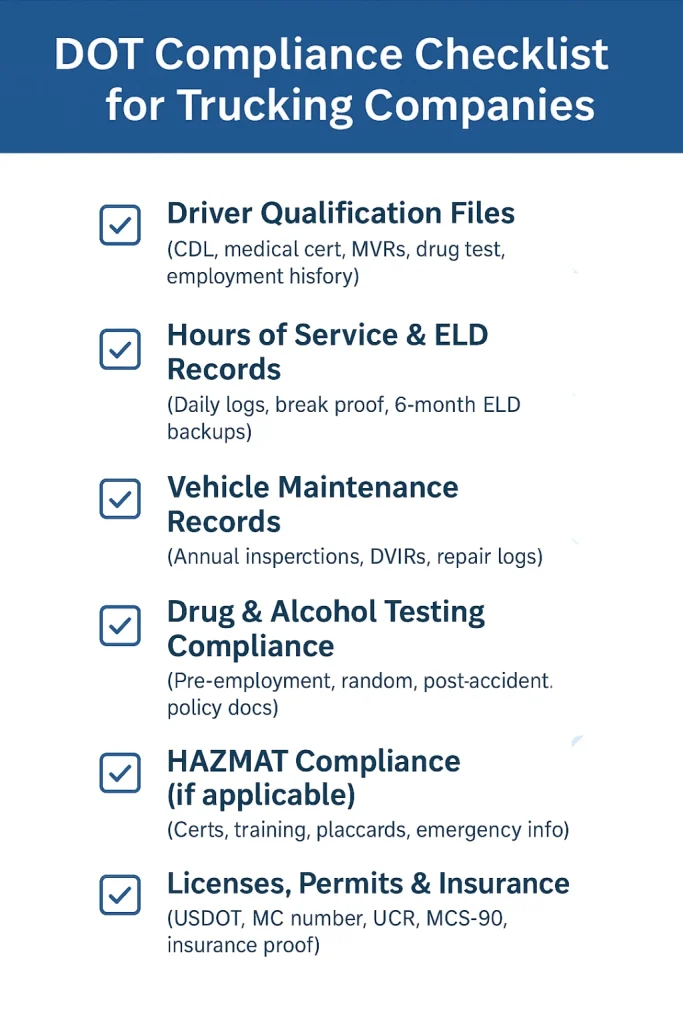
Quick Overview of DOT Compliance Checklist
There’s no shortcut when it comes to trucking company compliance. Whether you’re running two trucks or twenty, the expectations are the same.
Here’s a breakdown of the core items every carrier should be keeping up with:
Driver Qualification Files (DQF)
One of the first things auditors will check is your Driver Qualification File, and it needs to be complete for every driver in your fleet. Missing just one document could result in a violation. You can find the regulation here.
As part of your DOT compliance checklist, here’s what should be in every DQF:
A valid Commercial Driver’s License (CDL) with the correct endorsements.
A valid Medical Certificate confirming the driver is fit to operate a commercial vehicle.
Motor Vehicle Records (MVRs) from all states the driver was licensed in over the past three years.
The original employment application, including a 10-year work history for CDL drivers.
Results from pre-employment drug tests, as well as any follow-up testing if there was a previous violation.
A note related to the annual review of the driver’s driving record.
Proof of entry-level driver training, especially for new CDL holders
Any additional certifications tied to endorsements, such as tankers or HAZMAT (if applicable)
Keeping these records up to date is a core part of trucking company compliance. Maintain electronic logging data for a minimum of six months for compliance purposes. This alone is one of the most common problem areas during an audit, which is why it belongs at the top of your DOT FMCSA compliance checklist.
Hours of Service (HOS) and ELD Records
The FMCSA compliance checklist includes strict rules around driver hours and if you’re not tracking them correctly, you’re opening your business up to violations.
Every driver must follow Hours of Service (HOS) limits, which regulate how long they can be on duty, how much of that time can be spent driving, and when breaks are required. These rules exist to reduce fatigue-related accidents and apply to most commercial drivers, even those operating within a short-haul radius.
To stay compliant, your DOT compliance checklist should include:
Records from Electronic Logging Devices (ELDs) that track driving time automatically
Proof of 30-minute breaks after 8 cumulative hours of driving
Daily logs showing total hours worked
Store ELD backups for at least six months in case of an audit or inspection
If any drivers use the 150 air-mile short-haul exemption, make sure their exemption records are clear and up to date
Many trucking companies run into trouble here, especially if they’re still relying on paper logs or outdated systems. Even minor recordkeeping issues can lead to fines or poor safety scores. You can find the full legal text here.
Vehicle Maintenance and Inspection Records
Maintenance records are a required part of your DOT compliance checklist. If you can’t show that your trucks are inspected and serviced regularly, you risk violations, fines, or being taken off the road.
Here’s what should be in your files:
Keep annual inspection reports for each vehicle on file for at least 14 months.
Pre-trip and post-trip DVIRs should be done daily, clearly documented, and maintained for 3 months.
Logs of all maintenance, service, and repairs.
Documentation of any defects found and how they were fixed.
Within 15 days, the carrier should certify defects on Roadside Inspection Reports have been corrected. This must be maintained for 12 months from the date of the inspection.
Drug and Alcohol Testing Compliance
Drug and alcohol testing is a required part of your FMCSA compliance checklist. Every trucking company that operates CDL drivers must have a written testing policy and proof that testing is being done correctly.
Your records should include:
Pre-employment drug test results
Random testing program details
Post-accident, return-to-duty, and follow-up test records (if applicable)
Documentation of a DOT-compliant testing policy
Supervisor training certificates for reasonable suspicion testing
This doesn’t apply only to full-time drivers. Anyone in a safety-sensitive role, including part-time drivers, mechanics who move trucks, and backup drivers.
Failing to follow DOT and FMCSA regulations around drug testing is one of the fastest ways to get flagged during an audit. Here’s the FMCSA document on drug testing.
Hazardous Materials Compliance (If Applicable)
If your trucks haul fuel, chemicals, or other hazardous materials, your DOT compliance checklist needs to include proper HAZMAT documentation. These loads come with extra requirements, and non-compliance can lead to severe penalties.
Here’s what you need to have on file:
HAZMAT registration and proof of proper certification
Up-to-date HAZMAT training records for all involved employees
Every load needs the right labels, placards, and paperwork
Emergency response information kept in each vehicle
Security plan (if transporting certain quantities)
The rules are strict because the risks are high. Under DOT and FMCSA regulations, even one missing document can trigger a serious violation. If your company deals with hazardous cargo, make sure your compliance efforts match the added responsibility.
Licenses, Permits, and Insurance
No DOT checklist is complete without the proper licenses and insurance paperwork. Missing just one piece can lead to delays, penalties, or even being placed out of service.
At a minimum, your DOT compliance checklist should include:
A valid USDOT number
If you haul across state lines, make sure your MC number is active and up to date
Proof of Unified Carrier Registration (UCR)
The fleet’s MCS-90 form (proof of financial responsibility)
Commercial auto insurance policies
Standard Carrier Alpha Code (SCAC), if required for freight contracts
Each of these items ties directly into your ability to operate legally. Keeping them current and easily accessible should be part of your regular FMCSA compliance checklist reviews.
Staying Ahead with a DOT FMCSA Compliance Checklist
Using a clear DOT FMCSA compliance checklist helps you stay on top of what matters. Here are a few ways to keep your trucking company compliance in check:
Do regular internal audits. Don’t wait for DOT to come knocking. Review your files every quarter to catch expired licenses, missing drug test results, or outdated inspection logs.
Go digital when possible. Storing your documents in a secure, searchable system makes it faster to find what you need, especially under pressure.
Train your team. Ensure drivers, dispatchers, and supervisors know their responsibilities in staying compliant. The fewer gaps in dispatching communication, the fewer things fall through the cracks.
Update your DOT compliance checklist as rules change. Regulations can shift, especially around technology like ELDs or exemptions. Make sure your checklist reflects current requirements. Staying compliant is easier when it’s built into your workflow, not treated as a last-minute scramble.
Disclaimer: The information provided here is for general guidance and should not be considered legal or compliance advice. For specific compliance guidance, consult the FMCSA or a qualified transportation compliance professional.
Trucking Company Compliance Starts with the Basics
DOT compliance doesn’t have to be complicated but it does need to be consistent.
With so many moving parts to manage like driver files, inspections, service logs, and drug testing — it’s easy for something to slip through the cracks. That’s where a clear, organized DOT compliance checklist makes a real difference. It helps you stay audit-ready and keeps your trucks moving without costly downtime.
To make things easier, we’ve built tools into our dump truck management software that help you stay on top of compliance and vehicle maintenance. From tracking vehicle health to monitoring DOT compliance, the system gives you visibility into what’s current, what’s due, and what needs immediate attention.
If you’re looking for a simpler way to manage trucking company compliance and make smarter decisions about fleet maintenance, Dump Truck Dispatcher can help! Schedule a FREE demo to see how it works.
Time is lost in the gaps between loads. Not in big decisions, but in constant interruptions that never get tracked. In this article, you’ll see where those minutes go, why…
If you run trucks long enough, DOT inspections stop feeling rare. They become part of the job. What catches many fleets off guard is not the inspection itself, but the…
If trucks are running all day, but load counts still come up short, the issue is rarely effort or availability. More often, it comes down to hidden cycle time delays…